04 · Measure

Up or down. That’s all that matters.

Here are the tools you need to know if things are working. All free.

AnalyticsProfit
The breakdown

What to measure, and where.

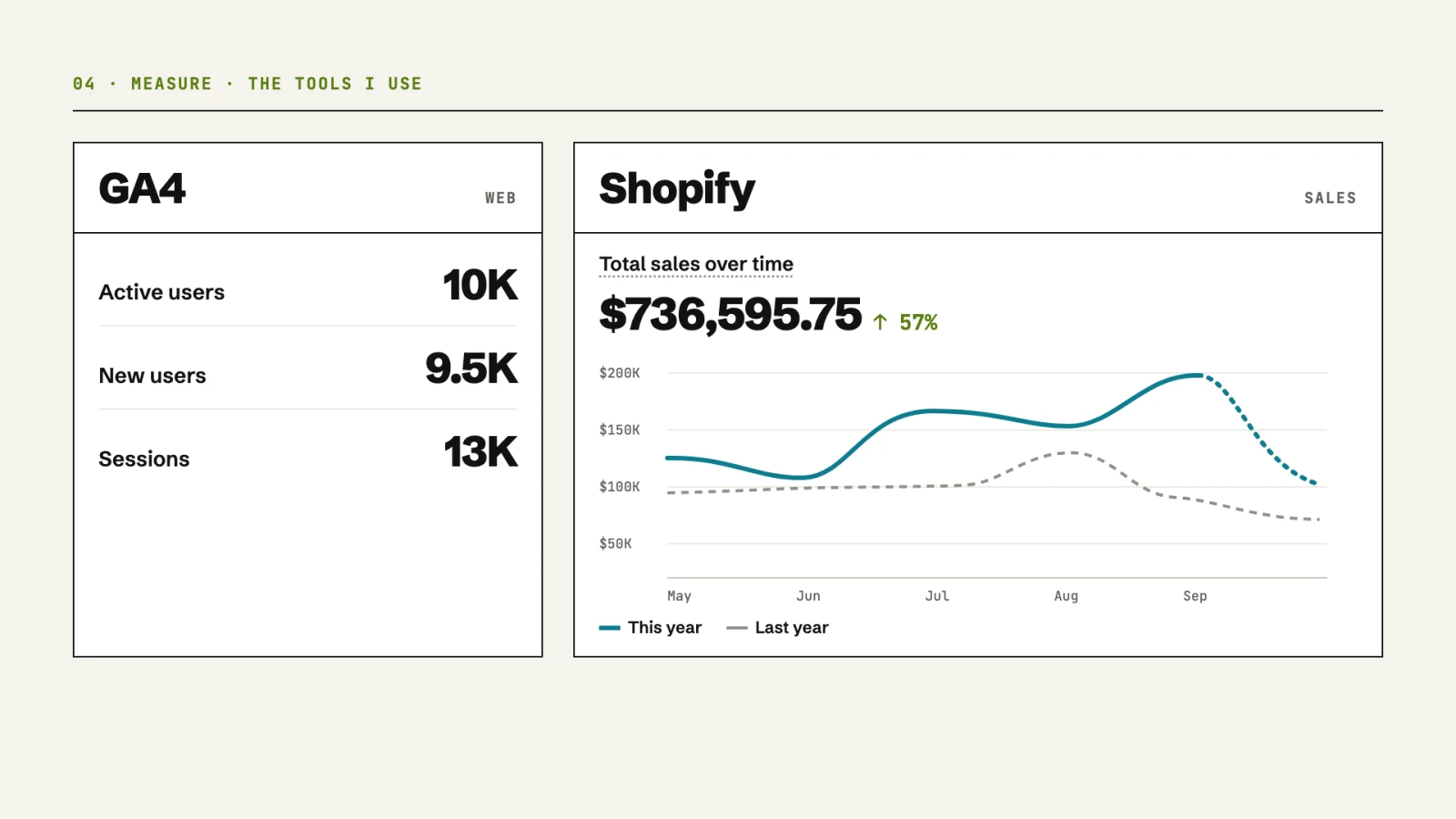
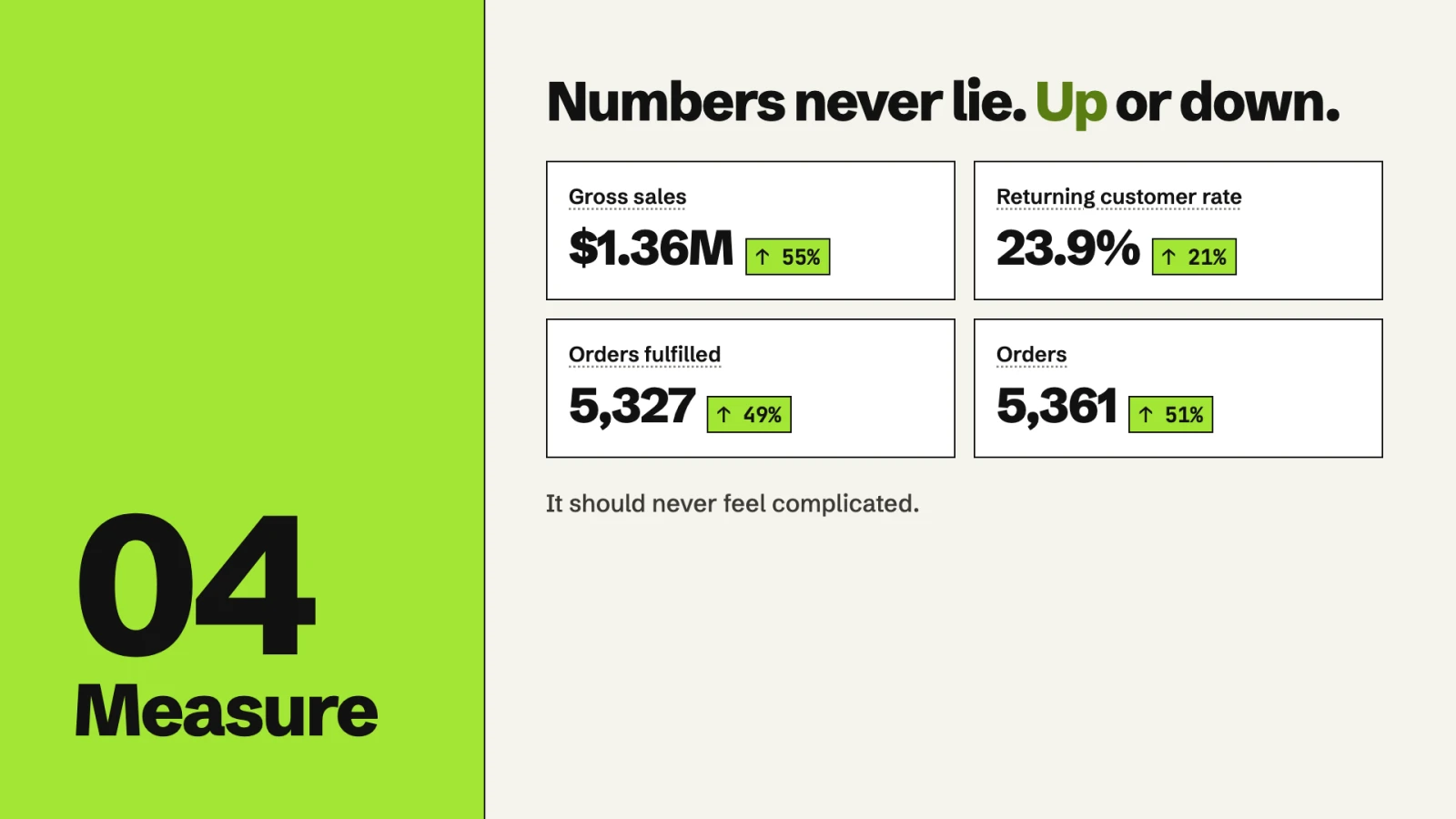
Numbers never lie. Up or down. It should never feel complicated. Here are the tools I use to analyze performance.

04 Measure. Numbers never lie, up or down. Gross sales $1.36M up 55%, returning customer rate 23.9% up 21%, orders fulfilled 5,327 up 49%, orders 5,361 up 51%.
Watch this part of the intro 2:31
04.1

The tools I use

Google Search Console and Google Merchant Center.

Google Search Console, because it tells you exactly how your SEO is performing, directly from Google, and it’s free.

Then Google Merchant Center, which is needed to show up in Google Shopping results, both organic and paid placements.
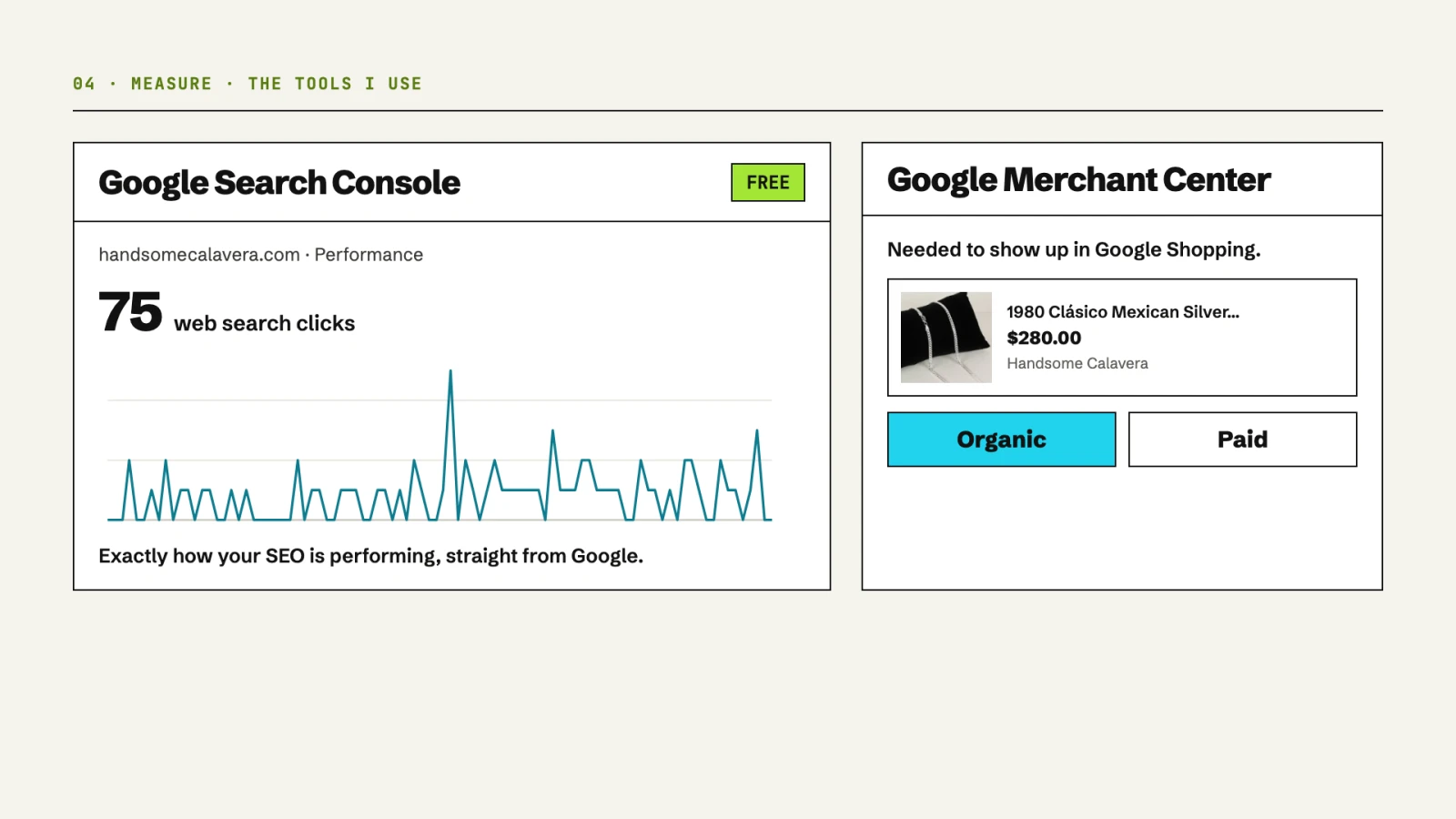
Google Search Console showing 75 web search clicks for handsomecalavera.com, and Google Merchant Center with a product listing for organic and paid placements.
Watch this part of the intro 2:38
04.2

Channels

Not all traffic is relevant traffic.

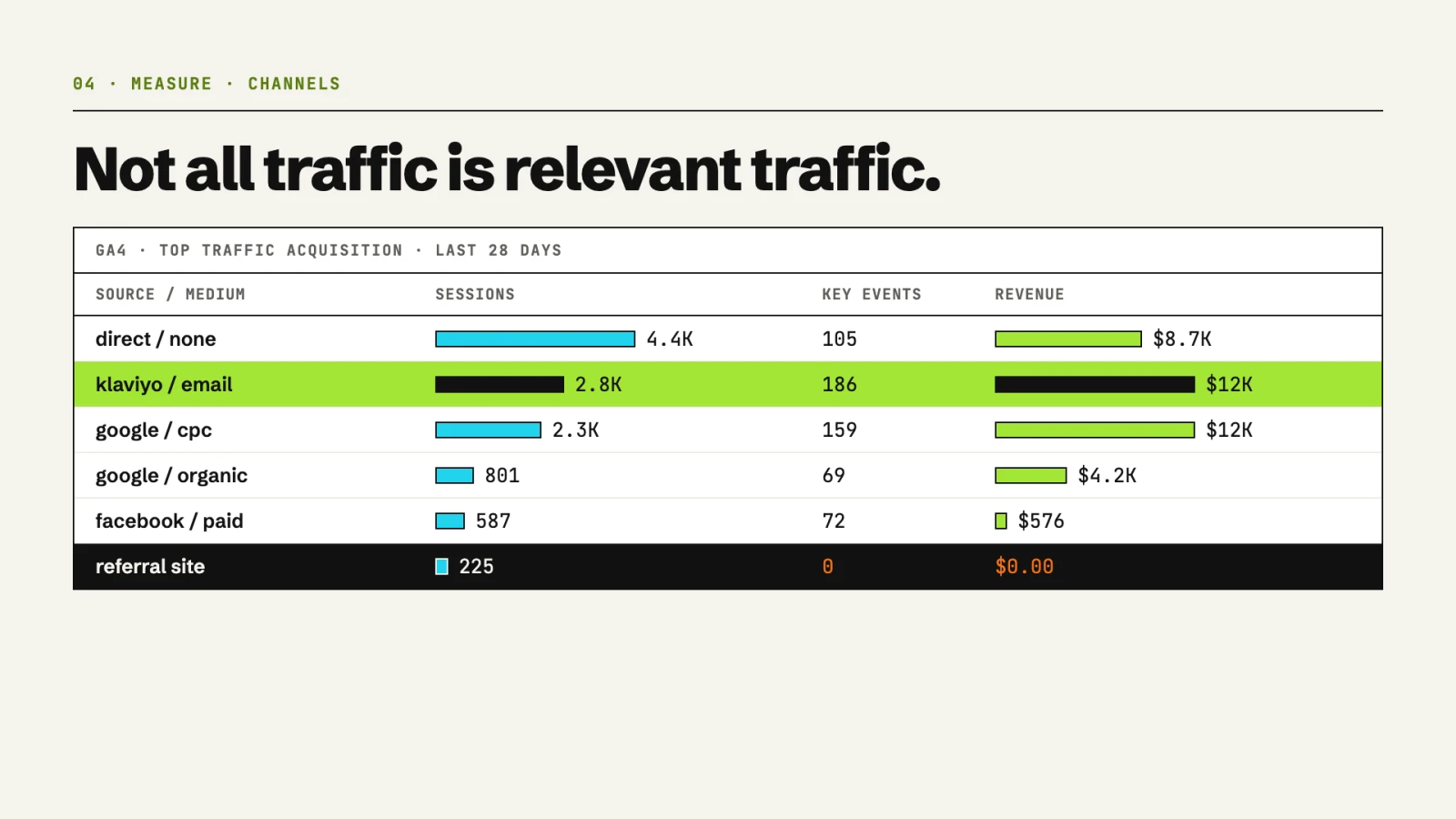
Eventually you’re going to want to know which channels are doing what: which channels are bringing in traffic versus which channels are converting into customers, because not all traffic is relevant traffic.

Not all traffic is relevant traffic. A GA4 traffic acquisition table with the Klaviyo email row highlighted: direct, Klaviyo email, Google cpc, Google organic, Facebook paid, and a referral with zero revenue.
Watch this part of the intro 2:51
04.4

Two questions

Does the math work?

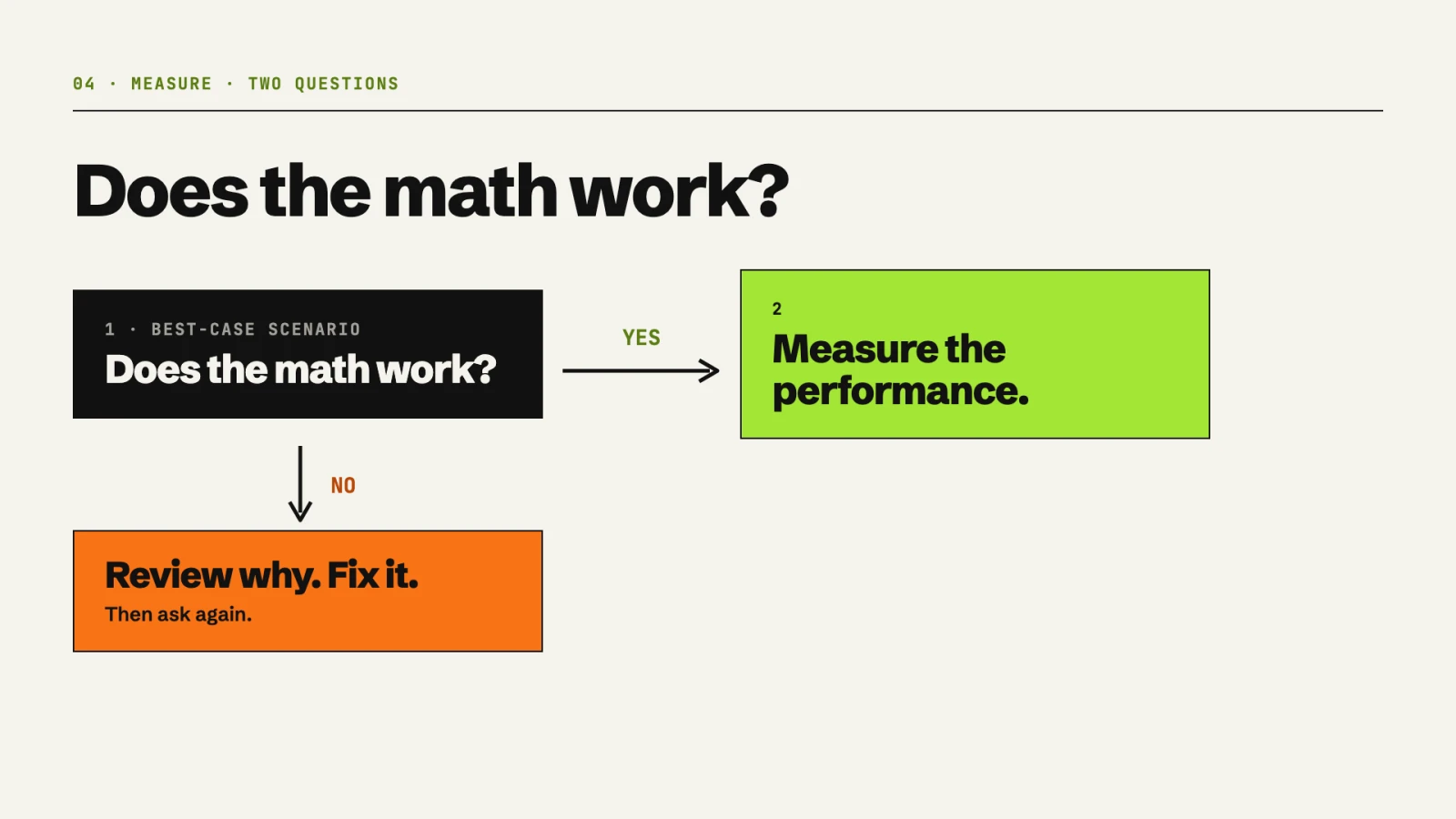
When it comes to analytics, there are two questions I like to ask. Under the best-case scenario, does the math work? If the answer is no, review why it’s not going to work and address that.

Once the math works, start measuring the performance.

Does the math work? Best-case scenario: yes, measure the performance. No, review why, fix it, then ask again.
Watch this part of the intro 3:06
04.5

Product economics

Are your products profitable?

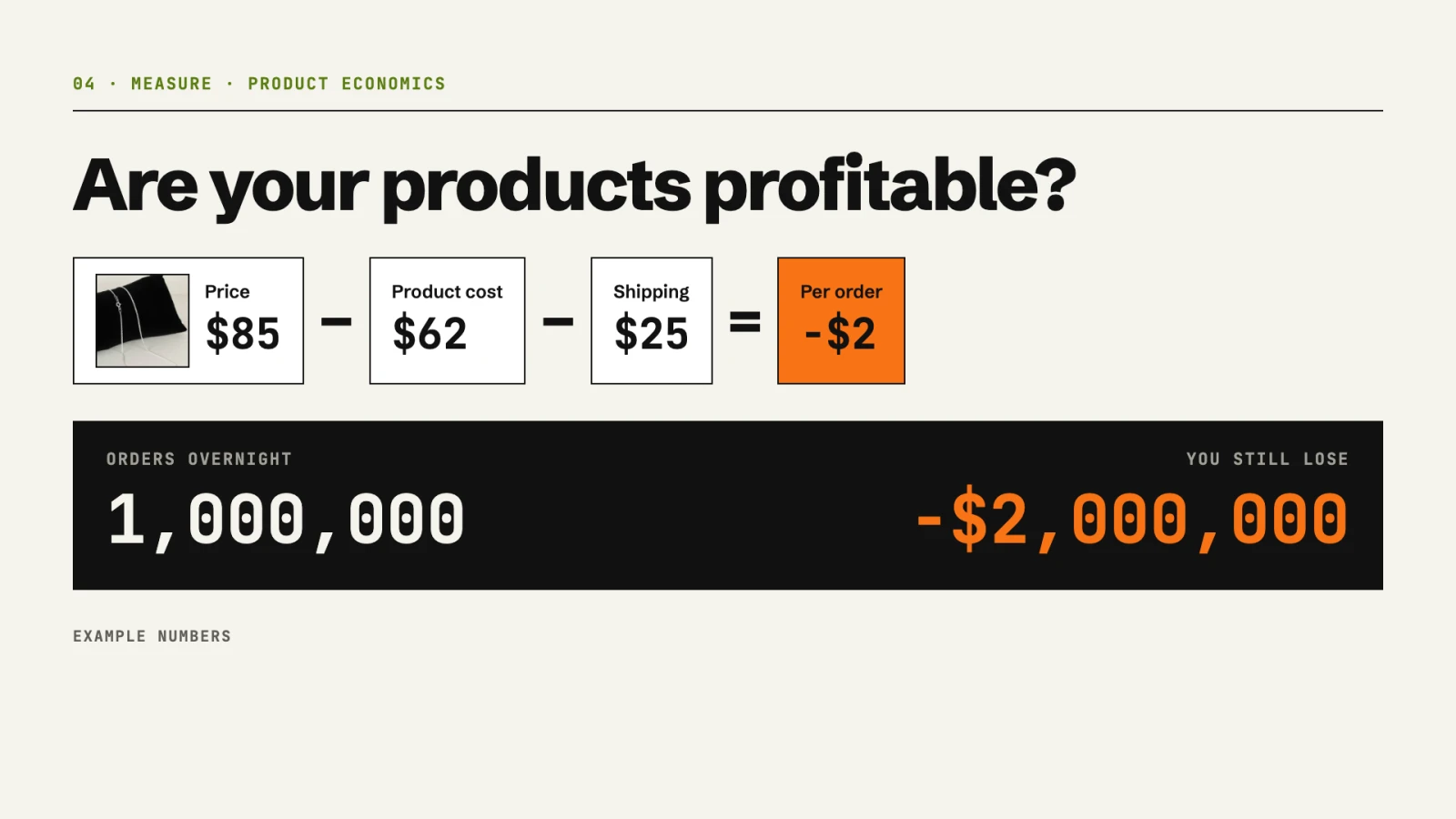
Here’s an example of ecommerce economics. Are your products profitable? If not, fix that before anything else.

Get the math to work here first, because even if you got a million orders overnight, you would still lose money if your products are shipping at a loss.

Are your products profitable? Example numbers: $85 price minus $62 product cost minus $25 shipping equals −$2 per order. A million orders overnight still loses $2,000,000.
Watch this part of the intro 3:18
04.6

Business economics

Profitable after expenses?

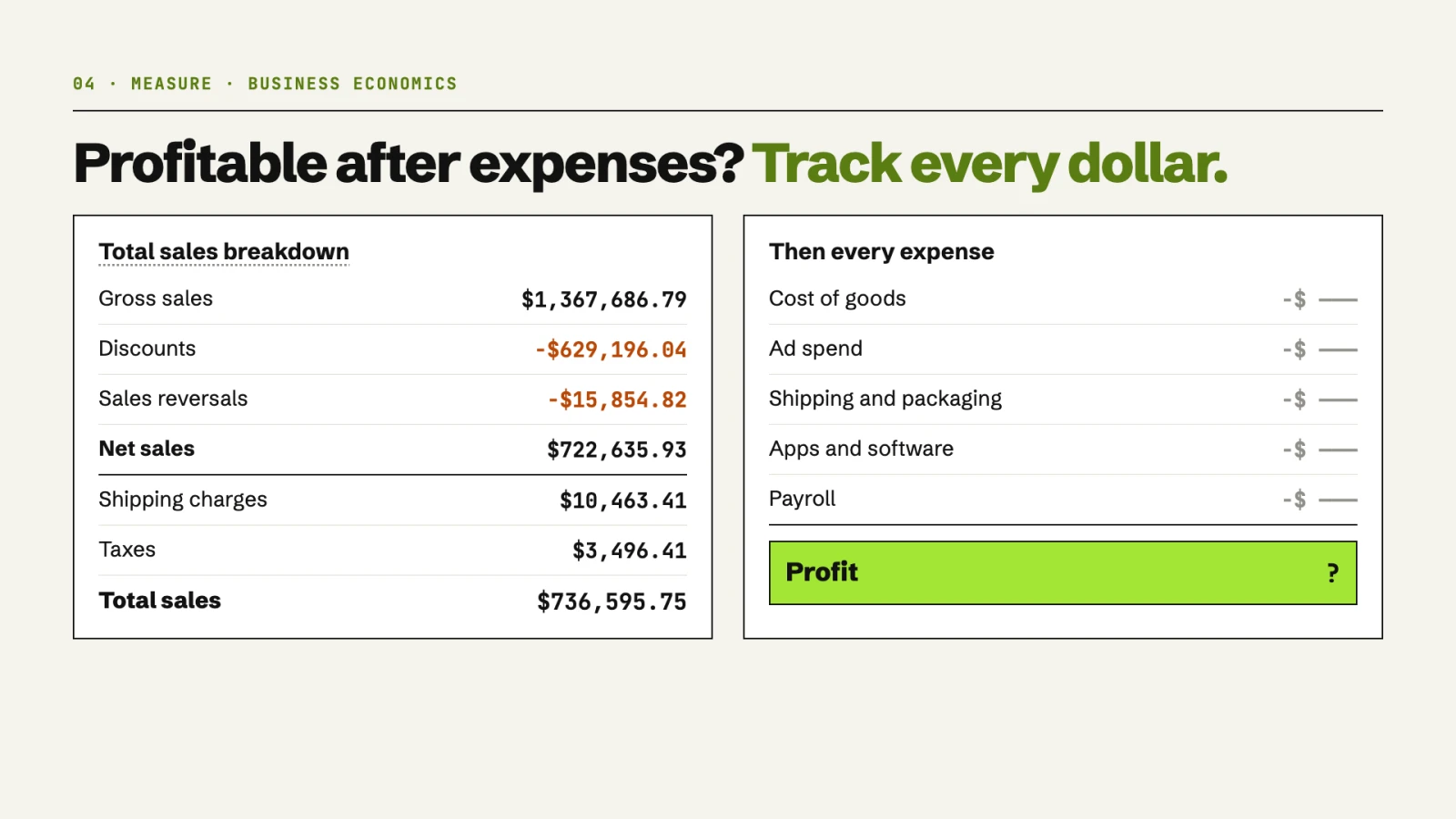
Then we look at your business as a whole. Is your business profitable after expenses?

In ecommerce, you need to track how every dollar is spent, or you will be leaving money on the table.

Profitable after expenses? A Shopify total sales breakdown from $1,367,686.79 gross to $736,595.75 total, then every expense down to profit.
Watch this part of the intro 3:32
Free tools I use for this
Organic search Google Search Console Monitor how your SEO is performing.
Google Shopping Google Merchant Center Make your products available in organic shopping listings.
Website analytics GA4 Analyze your web traffic.
Sales Shopify For everything related to your sales.
Learn it free, or hand it to me

Not sure this is where you’re stuck?

Take the self-assessment and get your results instantly, or skip straight to having my team fix it.

Full circle · back to 01 Get found Now get more traffic, and run it again.